
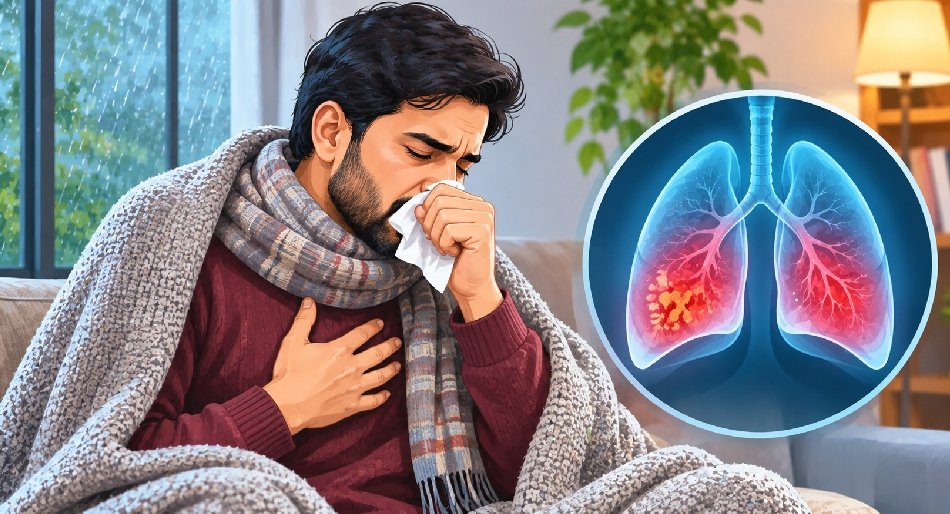
Pneumonia is not one illness but a family of lung infections, and it looks very different in a healthy 30-year-old and a 70-year-old living with COPD. Here is how the symptoms differ by type, why walking pneumonia is so easy to miss, and when it is time to see a pulmonologist.
Key Takeaways
- Pneumonia symptoms usually include a cough, fever and chills, chest pain when breathing, shortness of breath, and unusual fatigue. In adults over 65 they can be subtler, with confusion instead of a fever (NHLBI, NIH).
- Bacterial pneumonia, most often caused by Streptococcus pneumoniae, is the most common form and the more serious one. Viral and walking pneumonia are usually milder (American Lung Association).
- Walking pneumonia is a mild atypical infection, usually from Mycoplasma pneumoniae. Symptoms take one to four weeks to appear and the cough can linger for weeks (CDC).
- Adults aged 50 and older are 6.4 times more likely to develop pneumococcal pneumonia than adults aged 18 to 49, and hospitalisation risk climbs more than tenfold after 65 (American Lung Association).
- See a doctor right away for breathing difficulty at rest, chest pain, bluish lips, a fever above 39 degrees Celsius, or new confusion.
What Are the Most Common Symptoms of Pneumonia?
The most common pneumonia symptoms are a cough that may bring up mucus, fever and chills, chest pain when you breathe or cough, shortness of breath, and unusual tiredness. More than 900,000 people in the United States develop pneumococcal pneumonia each year, the most common bacterial form (American Lung Association).
Symptoms can arrive suddenly or build over a few days. Bacterial pneumonia tends to be the more severe type, with fever that can climb as high as 40.5 degrees Celsius, plus sweating, chills, and a rapid pulse.
Age changes the picture. Older adults may not run a fever at all. They can become weak, unusually sleepy, or suddenly confused. The NHLBI at the NIH notes that seniors may register a lower-than-normal temperature instead, so families often mistake pneumonia for ordinary frailty.
A resting oxygen reading below 94 percent on a pulse oximeter is a reason to seek care quickly. So is a cough that refuses to settle after three weeks, which this guide to a chronic cough that will not go away covers in more detail.
What Are the Main Types of Pneumonia?
Doctors classify pneumonia by what causes it: bacterial, viral, or fungal. Bacterial pneumonia, most often pneumococcal, is the most common form and the one most likely to need antibiotics. Viral pneumonia from influenza, COVID-19, or RSV is treated supportively, while fungal pneumonia is rare and mainly affects people with weakened immunity.
| Type of pneumonia | Common cause | How it usually feels | Typical recovery |
|---|---|---|---|
| Bacterial | Streptococcus pneumoniae | Sudden fever, chills, productive cough, chest pain | 1 to 3 weeks with antibiotics |
| Viral | Influenza, COVID-19, RSV | Flu-like start, dry cough, body aches | 1 to 3 weeks with supportive care |
| Walking (atypical) | Mycoplasma pneumoniae | Mild cough, low fever, able to keep working | Several weeks |
| Fungal | Moulds such as Aspergillus | Slow onset, mainly with weakened immunity | Weeks to months |
A second way to classify pneumonia changes treatment: where it started. Community-acquired pneumonia develops in daily life, while hospital-acquired pneumonia appears 48 hours or more after admission and often involves tougher, drug-resistant bacteria.
Is Walking Pneumonia Less Serious Than Other Types?
Walking pneumonia is usually milder than other bacterial pneumonia, and most people keep up with daily activities while they recover. It is caused most often by Mycoplasma pneumoniae, and symptoms take one to four weeks after exposure to appear, which is how outbreaks spread quietly (CDC).
The nickname comes from how mild it feels. Typical signs are a persistent dry cough, low-grade fever, headache, and chest discomfort. That does not make it harmless: some people develop complications needing hospital care, and the cough can last for weeks.
India saw a sharp rise after the pandemic. CDC surveillance data recorded a 9.0-fold jump above baseline in Mycoplasma cases in the third quarter of 2024, with cases climbing in younger children, a group once thought to be less affected. Macrolide resistance runs at about 28 percent worldwide.
Cases also climb through the monsoon and winter months, when indoor crowding helps germs spread. This guide to monsoon lung infections in Hyderabad explains how to reduce that seasonal risk.
Not sure whether your cough or breathlessness needs a specialist?
When Should You See a Pulmonologist?
You should see a pulmonologist when pneumonia symptoms are not improving after about a week of treatment, when the infection is severe enough to need oxygen, or when it keeps coming back. A chest specialist also steps in when a condition such as asthma or COPD makes recovery slow and complicated (American Lung Association).
Some signs need emergency care rather than an appointment. Go to hospital straight away for breathing difficulty at rest, chest pain, bluish lips or fingertips, new confusion, a fever above 39 degrees Celsius that will not settle, or coughing up blood.
Outside the emergency phase, a specialist helps in three situations: pneumonia that does not clear as expected and needs a CT scan or bronchoscopy, a repeat infection that hints at underlying lung disease, or a chronic condition that makes each infection riskier. If you have asthma or COPD, this breakdown of asthma versus COPD explains why the two are managed differently.
Who Is Most at Risk of Severe Pneumonia?
Adults over 65, children under five, and anyone with chronic lung, heart, kidney, or liver disease faces the highest risk of severe pneumonia. Adults aged 50 and older are 6.4 times more likely to develop pneumococcal pneumonia than adults aged 18 to 49, and after 65 the risk of hospitalisation rises more than tenfold (American Lung Association).
Habits and conditions stack the odds further. Smoking, heavy alcohol use, diabetes, and a weakened immune system all reduce the body’s ability to clear infection. The CDC lists age above 65 and serious underlying illness as the strongest risk factors.
India carries a heavy share of this burden. The country accounts for about 23 percent of the global pneumonia burden, with case fatality rates in adults reported between 14 and 30 percent (NIH indexed study, 2020). Streptococcus pneumoniae remains the most common organism in Indian adults with community-acquired pneumonia.
Prevention is improving. India lifted pneumococcal vaccine coverage in children to about 97 percent within seven years (WHO and UNICEF immunisation estimates, 2025). For adults, vaccination against pneumococcal disease, influenza, and COVID-19 is the most effective protection.
From Diagnosis to Recovery: What Treatment Looks Like
Most people recover from pneumonia within one to three weeks, but the path depends on the cause and how early treatment starts. Doctors confirm pneumonia with a chest X-ray, blood tests, and pulse oximetry, then match antibiotics to bacterial infection or supportive care to viral infection.
Recovery has two halves. The medical half is antibiotics for bacterial pneumonia, antivirals when influenza or COVID-19 is responsible, and oxygen or hospital care for severe cases. The physical half is rest, fluids, and a slow return to activity, with fatigue and a lingering cough for a few weeks after the fever goes.
Breathing and sleep are tightly linked. Untreated sleep apnea makes lung conditions harder to manage, and healing is slower when sleep stays broken. If you snore heavily or wake unrefreshed, an insomnia or sleep apnea self-check helps you tell the two conditions apart.
Where breathing problems trace back to a blocked airway at night, treatment makes a measurable difference. This guide to CPAP therapy for sleep apnea explains how it works, and the wider range of options sits in this overview of sleep apnea treatment in Hyderabad.
Prevention closes the loop. The World Health Organization notes that pneumonia is preventable and treatable, yet remains the leading infectious cause of death in children worldwide, killing about 740,000 children under five in 2019. Vaccination and prompt care for chronic conditions keep that risk low.
Recurrent or slow-to-clear pneumonia deserves a specialist look.
