
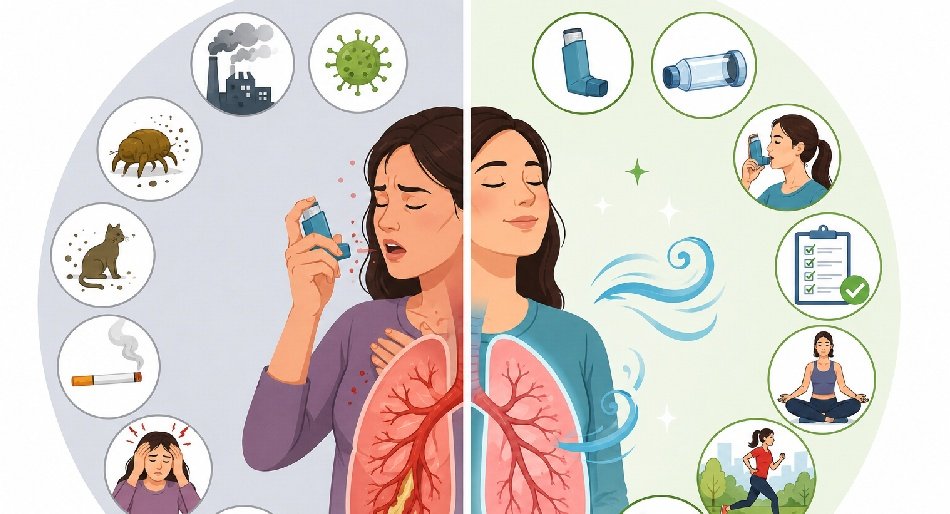
Asthma is a widespread condition affecting millions globally as a chronic respiratory condition. For many, asthma symptoms can be controlled with the help of inhalers and medication, along with some changes to their daily routines and lifestyle. However, standard treatment does not help some patients and they continue to experience frequent symptoms, repeated flare-ups, and a poor quality of life. This is categorized as difficult-to-treat asthma.
It is important to understand that difficult-to-treat asthma is not necessarily linked with a severe form of the disease. For an example, continued and poorly managed symptoms can be the result of improper inhalation techniques, poor adherence to treatment, and various environmental triggers, as well as coexisting medical illness. Understanding the reason and optimizing the treatment strategy can help to improve asthma control and the various comorbidities that are associated with it.
This article discusses the reasons that asthma can become difficult to manage and the ways to treat patients with advanced strategies.
What is difficult to treat asthma?
Difficult to treat asthma is defined when asthma symptoms are poorly managed even after adherence to the recommended medications. This usually includes double- or triple-therapy with medium- or high-dose inhaled corticosteroids plus other controller medications.
Some of the common symptoms include:
- Frequent occurrences of wheezing and coughing
- Difficulty catching your breath while engaging in activities of daily living
- Experiencing asthma symptoms during the night
- Making frequent trips to the emergency department for visits
- Repeated reliance on the use of the rescue inhaler
- Repeated use of oral steroids in a single year
It is important to understand that the presence of difficult-to-treat asthma is not necessarily an indication that a patient suffers from severe asthma and there are almost endless reasons that can and will interfere with an effective treatment plan.
Typical Reasons for Difficult to Treat Asthma
Multiple factors can lead to the poor treatment of asthma.
1. Improper Use of Inhalers
Improper inhaler use is one of the main causes of uncontrolled asthma. Even the best inhalers will not help if the medication does not reach the lungs effectively.
Common inhaler use errors include the following:
- Not shaking the inhaler,
- Incorrect breathing,
- Poor timing between breathing and the release of medication,
- Not holding the breath after breathing in,
- Inhaler-related problems can be resolved if inhaler technique is routinely reviewed by a healthcare professional.
2. Poor Adherence to Controller Medications
Once symptoms have been controlled, patients tend to stop using controller medications. Asthma medications should not be missed because they are preventive in nature and should be used on a daily basis.
Poor adherence to controller medications may lead to:
- Longer airways inflammation,
- More frequent asthma attacks, and
- Progressive deterioration of lung function.
3. Continued Exposure to Asthma Triggers
Asthma may be difficult to control if exposure to asthma triggers is ceaseless.
Examples of common asthma triggers:
- Dust mites,
- Animal hair and dander,
- Pollens,
- Smoke (tobacco),
- Pollution,
- Chemicals, and
- Strong Odors.
Asthma management includes identifying asthma triggers and, if possible, controlling exposure.
4. Other Medical Conditions
Other diseases and health conditions may exacerbate the symptoms of asthma and may also make treatment of asthma less effective.
These include the following:
- Allergic rhinitis
- Sinusitis
- Gastroesophageal reflux disease (GERD)
- Obesity
- Obstructive sleep apnea
- Anxiety and depression
Control of these conditions is beneficial for control of asthma.
5. Smoking
Airways are continuously damaged by smoking, even by passive smoking. This reduces the effectiveness of asthma medications. There is a considerable worsening of the symptoms of asthma by passive smoking.
The degree of damage the lungs have sustained by smoking is relevant to the improvement of the lungs and the improvement of the responsiveness to the treatment.
6. Severe Asthma
A small but significant number of patients have asthma that is uncontrollable despite the addressing of all of the contributory factors. This is severe asthma and the management of this group of patients requires the use of advanced modalities of treatment, including the use of biologics.
How to Gain the Optimal Control of Asthma
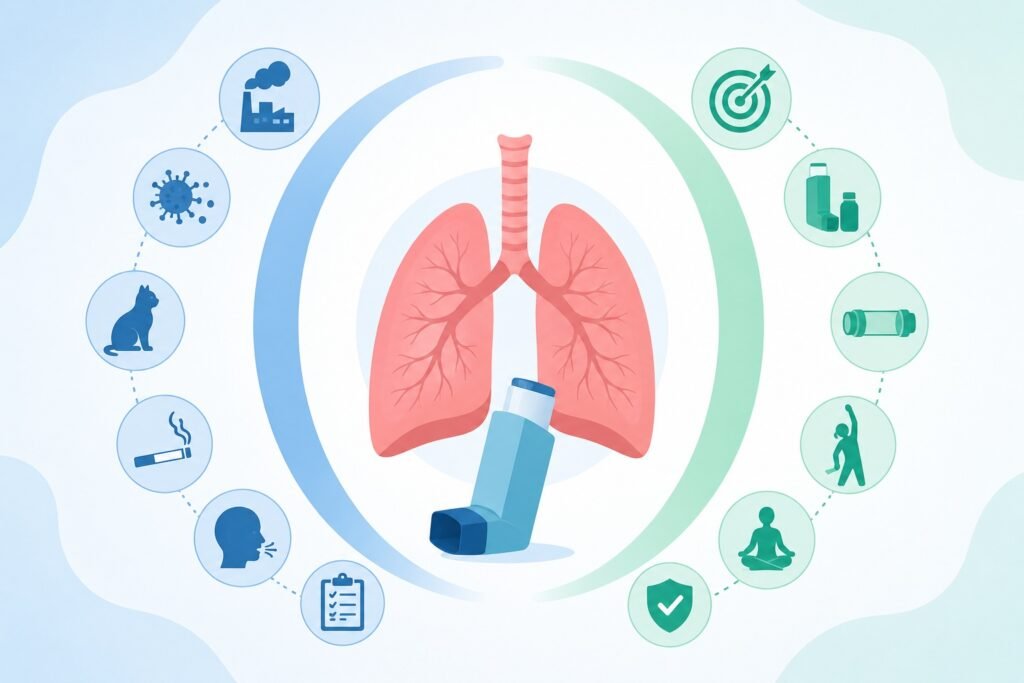
The control of asthma cannot be achieved by simply adding more medications. It requires a holistic approach.
Correct Diagnosis
The first essential step is to ensure that the diagnosis of asthma is accurate.
Asthma can be mimicked by a number of disorders, such as:
- Chronic obstructive pulmonary disease (COPD)
- Vocal cord dysfunction
- Heart disease
- Bronchiectasis
An accurate diagnosis is established by pulmonary function tests and a thorough clinical evaluation.
Regular Assessment
The symptoms of asthma can change over a given period of time. This requires a regular follow-up and helps the healthcare provider to assess the control achieved over the disease and determine:
- The frequency of symptoms
- The effectiveness of the medications
- The technique of using the inhaler
- The degree of exposure to triggers
- The status of the lungs
Control of the disease is then adjusted based on the assessment.
Personalized Treatment Plans
Every asthma patient is different. A personalized treatment plan considers:
- Age
- Severity of symptoms
- Trigger profile
- Associated medical conditions
- Lifestyle factors
Individualized care often leads to better outcomes than a one-size-fits-all approach.
Strategies to Improve Asthma Control
| Strategy | Benefit |
|---|---|
| Correct inhaler technique | Better medication delivery |
| Consistent medication use | Reduced inflammation |
| Trigger avoidance | Fewer flare-ups |
| Weight management | Improved breathing function |
| Smoking cessation | Enhanced treatment response |
| Treatment of allergies | Better symptom control |
| Regular follow-up | Early detection of problems |
The Role of Lifestyle Modifications
Lifestyle changes can play a significant role in improving asthma control.
Maintain a Healthy Weight
Obesity is associated with increased asthma severity and reduced response to medications. Even modest weight loss can improve breathing and overall lung function.
Exercise Regularly
Physical activity helps improve cardiovascular fitness and lung capacity. Patients should discuss suitable exercise plans with their healthcare provider.
Control Your Anxiety
Anxiety and stress can aggravate your asthma. The following can help asthma and improve anxiety:
- Improved breathing
- Meditation and yoga
- Sleep
- Clear asthma symptoms.
Avoid Tobacco Smoke
The most effective way to improve respiratory health is to avoid active and passive smoking.
Advanced Treatment Options
For patients whose asthma remains uncontrolled despite optimized standard treatment, advanced therapies may be considered.
These include:
Biologic Therapies
Biologics target specific inflammatory pathways involved in asthma.
Benefits may include:
- Reduced asthma attacks
- Improved lung function
- Lower need for oral steroids
- Better quality of life
Specialist Evaluation
Referral to a pulmonologist may be necessary for:
- Frequent hospitalizations
- Severe symptoms
- Diagnostic uncertainty
- Consideration of advanced therapies
A specialist can perform detailed testing to identify specific asthma phenotypes and tailor treatment accordingly.
Reference to specialists
Pulmonology specialists are required for:
- Frequent hospitalization
- Severe symptoms
- Diagnostic uncertainty
- The possible need for advanced treatment
A specialist can give detailed testing to find the various asthma types and decide which treatments would be effective.
When Should Patients Get Medical Care?
Patients should seek prompt medical care if they experience:
- Severe shortness of breath
- Difficulty speaking due to breathlessness
- Persistent wheezing despite medication
- Frequent rescue inhaler use
- Repeated asthma attacks
Early intervention can prevent serious complications and improve long-term outcomes.
Conclusion
Frustration can be felt on both the patient and healthcare sides when asthma becomes difficult to treat. However, exposure to triggers can often be blamed for uncontrolled symptoms. Symptoms may also be compounded by a patient being a smoker or having other underlying conditions.
Effective monitoring along with a patient-tailored treatment plan, and a patient’s lifestyle balance can significantly impact control of the patient’s asthma. For patients having symptoms after still following the balance and still receiving the right treatment and care, visiting a specialist may offer more options.
With the right treatment and care, many people suffering with difficult-to-treat asthma have the right treatment to achieve control of their symptoms and offer patients a higher quality of life.
