
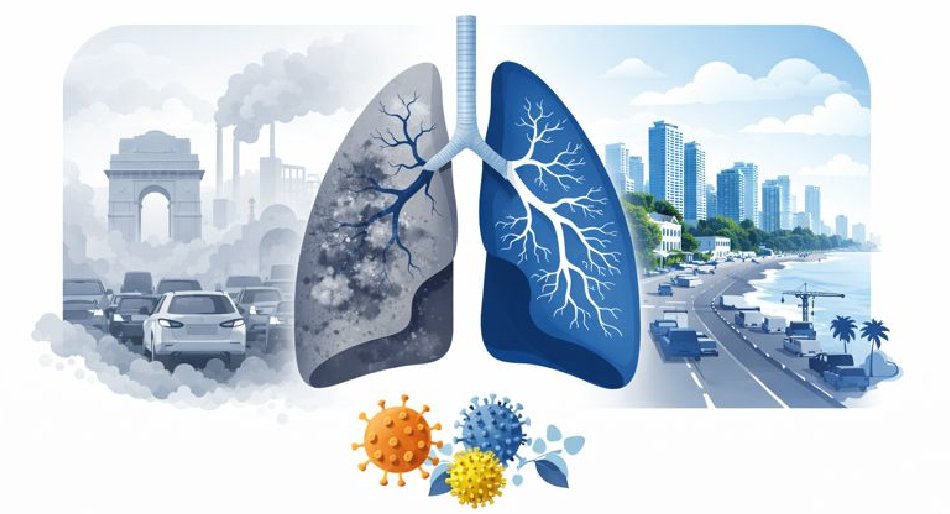
Pollution in India is an emergency threatening public health. The changing seasons affect air quality, creating a recurring cycle of health problems for millions of people living in urban areas. Seasonal air quality leads to chronic respiratory health problems, from the heavy winter smog in the North of India to the warm, humid, dusty air in coastal metropolitan areas.
From pre-existing conditions like asthma, COPD, and allergic rhinitis, the seasonal changes in air quality represent life-threatening triggers. These seasonal changes are of great importance to patients who have experienced and suffered them, as they are the most severely affected.
The Winter Crisis: The Quality of Air in North India
The winter season in North India, predominantly in the Indo-Gangetic Plain, is synonymous with perilous air quality. With the descending temperatures, wind speed also lessens, which leads to pollutants becoming trapped close to the surface, a situation known as the temperature inversion phenomenon.
Effects on Asthma and COPD in the Delhi National Capital Region
The winter pollution crisis predominantly affects Delhi NCR. In the prominent months, which are from November to January, the AQI surpasses the severe category like clockwork.
Patients with asthma or Chronic Obstructive Pulmonary Disease (COPD) suffer bronchiolitis due to inflammation from particle matter, measuring 2.5 micrometers or less (PM2.5), which permeates and gets trapped in the pulmonary system. Emergency departments in Delhi experience a documented increase in the range of 20-30% in the months of PM2.5 peak concentration events due to the rise in cases of respiratory distress related to acute wheezing and chest discomfort.
Burning Biomass and Toxic Smog
Burning crop residue in the nearby states of Punjab and Haryana significantly contributes to the air pollution during the winter months. The north-westerly winds transport the smoke to Delhi and the surrounding cities, which are loaded with carbon monoxide, polycyclic aromatic hydrocarbons (PAHs), and PM2.5. It has the potential to cause chronic respiratory distress and is a significant trigger for respiratory distress, chronic eye irritation, and lung function declines.
Seasonal Changes: Specific Triggers of PM2.5
Winter is the peak season for air pollution in India, although pollution is a cross-cutting challenge throughout the year, with seasonal spikes causing distinct health effects.
Chronic Bronchitis and PM2.5 Convergence
Seasonal PM2.5 levels and rates of chronic bronchitis also display a high degree of correlation.
Winter: Peak PM2.5 levels due to the increase in biomass burning and temperature inversions.
Summer: PM10 levels due to coarse dust increase, and vehicular emissions contribute to PM2.5 levels.
Monsoon: The rain refreshes the area, cleansing the air of particulates.
The critical October/November and February/March transitions are most important. With drops in temperature and increases in PM2.5, one can develop “seasonal bronchitis,” resulting in a persistent cough and bronchial mucus.
The Diwali Spike: Sulfur Dioxide and Asthma
Air quality during Diwali is crucial. Firework shows emit a mixture of heavy metals, and sulfur and nitrogen dioxide.
In patients with bronchial asthma, the sulfur dioxide acts as a bronchial spasmogen. During the festival, the rate of hospital admissions due to acute asthma exacerbations doubles in the two days following. The heavy fog isn’t just an annoyance. It can lead to exacerbations that require a higher dosage of steroids to manage for a prolonged period.
Viral Infections and Post-Monsoon Allergens
As the monsoon withdraws, the humidity that remains, along with the cooling temperatures, is perfect for the overgrowth of both mold and fungi. The collection of moisture and dust particles on the road also increases. Biological and chemical allergen exposure triggers a higher incidence of Acute Respiratory Infections (ARIs), including viral fevers and upper respiratory tract infections.
Regional Analysis: Coastal Metros vs. The Hinterland
The effects of air pollution on the body vary by geography and prevailing weather patterns.
Increasing Pollution in Coastal Cities (Mumbai & Kolkata)
The “sea breeze” effect was once believed to help coastal cities avoid the worst of pollution, but recent evidence suggests otherwise.
Mumbai: High levels of dust pollution result from heavy construction and vehicular traffic. During recent winters, Mumbai’s AQI has surpassed Delhi’s, and there has been an increase in allergic bronchitis.
Kolkata: High population numbers and particular geography trap diesel exhaust. There has been an increase in hospitalizations for lower respiratory tract infections, especially among elderly patients.
Triggers of COPD in South India (Bengaluru & Chennai)
Compared to most other Indian cities, South Indian cities enjoy better AQI due to less stubble burning and better air circulation. But the management of COPD is different.
The primary cause in the South is high humidity plus vehicular emissions. In contrast to North Indian patients, who have to deal with cold smog, southern patients experience humidity-induced chest tightness and mold sensitivity. Here, management focuses more on the allergic triggers and humidity than on the chilly air.
Regional Pollution Triggers and Respiratory Impacts
| Region | Primary Season of Concern | Main Pollutant Triggers | Common Respiratory Health Impact |
|---|---|---|---|
| North India (Delhi, Punjab, UP) | Winter (Nov–Jan) | Stubble burning smoke, Vehicle exhaust, PM2.5 | Severe Asthma attacks, COPD exacerbation, Pneumonia |
| Coastal Metros (Mumbai, Kolkata) | Winter & Post-Monsoon | Construction dust, Sea-salt aerosols, Diesel fumes | Allergic Rhinitis, Chronic Cough, Bronchitis |
| South India (Bengaluru, Chennai) | Winter (Moderate) | Traffic congestion, Road dust, Pollen | Allergic Asthma, Sinusitis, Humidity-induced breathlessness |
Long-Term Consequences: Children and Urban Development
The assault on the lungs creates lasting damage that can span generations.
Stunted Lung Growth in Children
Children breathe faster than adults, inhaling more pollutants per unit of body weight. Long-term exposure to high AQI in cities like Delhi or Kanpur is leading to stunted lung growth. Studies suggest these children may never achieve their maximum lung capacity, putting them at high risk for COPD and cardiovascular diseases early in adulthood—essentially creating “non-smoking smokers.”
Construction Dust and Silicosis Risks
Rapid urbanization means perpetual construction. The resulting silica-laden dust is a significant respiratory hazard. Inhaling construction dust over long periods can lead to symptoms similar to silicosis and chronic lung inflammation. This year-round issue worsens during dry, windy months.
Prevention and Management Strategies
Protecting lung health when living in Indian cities means employing a defensive strategy.
Managing Respiratory Issues During Smog
Monitor AQI: Outdoor exercising is not recommended when AQI is over 200.
Wear N95 Masks: PM2.5 particles can pass through cloth masks, so use N95 masks.
Create a Clean Room: Place a HEPA-filter air purifier in your bedroom.
Hydration: Keeping airways moist and cleansing toxins is accomplished by drinking water.
Medication Adherence: Inhalers should not be skipped, and always have rescue medication available.
The Sleep-Pollution Connection
There is an important relationship between air quality and sleep. Increased air pollution results in consistent irritation and swelling in the upper respiratory airways, leading to inward swelling and narrowing of air passages. For people who snore, this condition usually worsens.
This may be Obstructive Sleep Apnea (OSA) made worse by external conditions. Snoring more and sleeping worse in the months of high pollution means. The weakened immune system and poor sleep mean the body is more vulnerable to respiratory illness. For a complete evaluation regarding how pollution affects your sleep and the patency of your airways, you should see an Expert in Sleep Medicine.
External Resource: To find more information about the effects of air pollution on health, check the World Health Organization (WHO) Global Air Quality Guidelines.
Frequently Asked Questions (FAQ)
Only the N95 or N99 mask is able to filter PM. 2.5. Cloth masks and surgical masks do not protect you from that.
Cold air makes it worse, it’s the lower levels of cortisol, and the pollution stuck in the temperature inversion.
They do not filter PM. 2.5 and don’t help HEPA air purifiers. They can absorb some small, harmful substances.
The PM. 2.5 enters the bloodstream, causing inflammation that increases the chance of a heart attack and stroke.
