
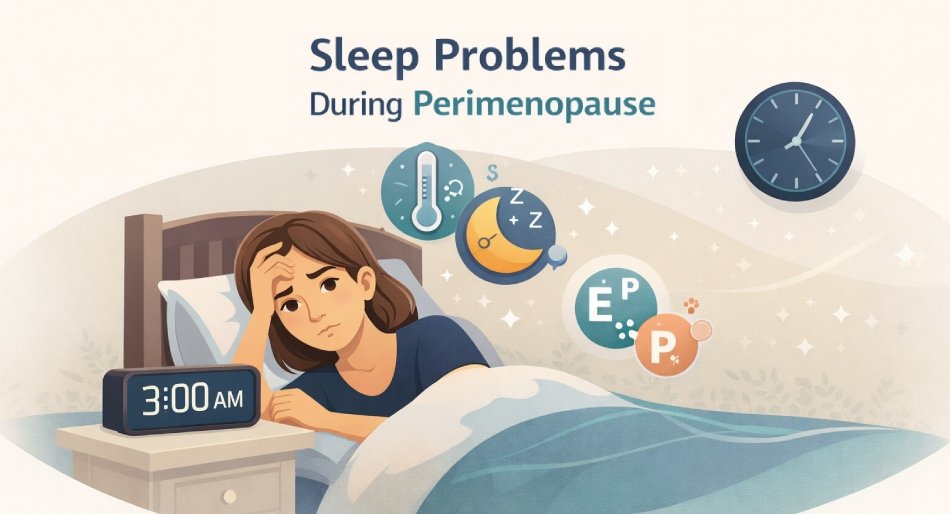
If you find yourself staring at the ceiling at 3:00 AM, wondering why your body has forgotten how to rest, you are not alone. For many women, their 40s bring a specific, often frustrating transition: Perimenopause.
While most associate this phase with irregular periods or hot flashes, sleep disruption is often the first—and most debilitating—symptom. It is a cruel irony that just as life becomes its busiest (balancing careers, aging parents, and growing children), restorative sleep becomes elusive.
Understanding the biological connection between your hormones, your sleep cycles, and your waistline is the first step toward reclaiming your health.
Key Takeaways: Sleep & Perimenopause
- Hormonal Shift: Dropping progesterone and fluctuating estrogen disrupts the brain’s ability to stay asleep.
- The Weight Link: Poor sleep increases hunger hormones (ghrelin), leading to “menopause weight gain.”
- Hidden Risks: Perimenopause significantly increases the risk of Obstructive Sleep Apnea (OSA) in women.
What is Perimenopause?
Perimenopause is the transitional phase leading up to menopause, the point when the ovaries gradually decrease hormone production. This phase can last anywhere from a few years to over a decade.
During this time, “sleep architecture”—the organization of your sleep stages—changes. Clinical studies indicate that nearly 50% of women in perimenopause report sleep disturbances. Unlike general insomnia, perimenopausal sleep issues often involve falling asleep easily but waking up in the early morning hours with racing thoughts or physical discomfort.
Hormonal Changes: The Root of Restlessness
The primary drivers of your sleepless nights are the fluctuations of two key hormones: Estrogen and Progesterone.
1. The Decline of Progesterone
Progesterone is often called “nature’s Valium.” It has a calming, anti-anxiety effect on the brain and promotes deep sleep. As perimenopause begins, progesterone levels often drop faster than estrogen. Without this natural sedative, women become more prone to “wired but tired” feelings and early morning wakefulness.
2. Estrogen Fluctuations
Estrogen helps regulate body temperature and magnesium metabolism. When estrogen levels swing wildly or drop, it disrupts the body’s internal thermostat. This leads to the brain “misfiring” and perceiving a need to cool the body down, resulting in sudden wakefulness.
| Disruption Pattern | Primary Hormonal Culprit | The Experience |
|---|---|---|
| Sleep Onset Insomnia | Low Progesterone | You feel “tired but wired.” Without this natural sedative, anxiety spikes and racing thoughts prevent you from drifting off. |
| Sleep Maintenance Insomnia | Estrogen Fluctuations | Your internal thermostat malfunctions or bladder lining thins, causing physical wake-ups (sweating or urgency) throughout the night. |
| Early Morning Awakening | Cortisol Spikes | Stress hormones surge prematurely in the circadian rhythm, waking you fully alert at 4:00 AM with no chance of returning to sleep. |
Common Sleep Disruptions in Your 40s
Sleep issues during this transition are rarely one-dimensional. Most women experience a combination of the following:
- Sleep Onset Insomnia: This condition is characterized by the inability to initiate sleep at the beginning of the night. It is frequently driven by psychological factors such as heightened anxiety or a “racing mind,” where persistent thoughts prevent the transition into rest. Physiologically, this is often linked to a deficiency in progesterone, a hormone that typically exerts a calming, sedative effect on the brain.
- Sleep Maintenance Insomnia: This involves frequent or prolonged interruptions throughout the sleep cycle. Individuals may fall asleep without issue but wake up repeatedly during the night. The primary struggle is the inability to return to sleep once disturbed, leading to fragmented, non-restorative rest that leaves the individual feeling unrefreshed.
- Early Morning Awakening: This pattern is defined by waking up prematurely, often as early as 4:00 AM or 5:00 AM, regardless of the previous night’s bedtime. Because the individual is unable to fall back asleep for the remaining hours of the night, this condition results in a cumulative state of chronic sleep debt, which can severely impact cognitive function and daytime energy levels.
Night Symptoms That Steal Your Rest
Beyond brain chemistry, physical symptoms can joltingly interrupt sleep:
- Night Sweats (Vasomotor Symptoms): These are hot flashes that occur during sleep. The resulting adrenaline surge causes the body to sweat profusely, often requiring a change of sheets and making immediate return to sleep difficult.
- Heart Palpitations: Fluctuating hormones can cause the heart to “flutter” while lying down, inducing a sense of panic.
- Nocturia (Urinary Urgency): Lower estrogen can thin the lining of the bladder, increasing the frequency of nighttime bathroom trips.
The Sleep-Weight Connection: Why Exhaustion Leads to Weight Gain
One of the most frustrating aspects of perimenopause is “stubborn” weight gain. While many blame metabolism alone, sleep deprivation is a primary driver of weight gain in middle age.
- Hormonal Hunger: When you are sleep-deprived, your body increases ghrelin (the hunger hormone) and decreases leptin (the fullness hormone). This creates intense cravings for high-calorie carbohydrates and sugar.
- Insulin Resistance: Poor sleep affects how your body processes insulin. Chronic tiredness can lead to higher blood sugar levels, making it easier for your body to store fat, particularly around the midsection.
- Cortisol Spikes: Lack of sleep keeps cortisol (the stress hormone) elevated. High cortisol signals the body to “protect” itself by holding onto belly fat.
Hidden Sleep Disorders to Watch For
This is a critical area often overlooked by general practitioners. Hormonal loss doesn’t just cause “light sleep”—it can trigger medical sleep disorders.
- Obstructive Sleep Apnea (OSA): Estrogen and progesterone protect the muscle tone in the airway. As these levels decline, the airway can collapse during sleep.
- Expert Insight: Post-menopausal women are significantly more likely to develop sleep apnea than pre-menopausal women, but it is often misdiagnosed as depression or “brain fog.”
- Restless Legs Syndrome (RLS): There is a strong correlation between hormone-influenced dopamine drops and iron deficiencies during perimenopause that trigger the uncontrollable urge to move your legs at night.
Tips to Improve Sleep Quality and Manage Weight
While you cannot stop the biological transition, you can manage the symptoms:
- Optimize Your Environment: Keep your bedroom below 68°F (20°C). Use moisture-wicking bamboo pajamas and cooling mattress pads.
- Establish a “Buffer Zone”: Create a 30-minute screen-free wind-down routine to lower cortisol levels before bed.
- Watch the “Sleep Stealers”: Avoid caffeine after noon and limit alcohol. While alcohol may help you fall asleep, it fragments the sleep cycle and worsens night sweats.
- Consider Targeted Supplements: Magnesium glycinate can support muscle relaxation, while Melatonin may help reset the sleep-wake cycle. (Always consult your physician first).
When to Seek Professional Help
Occasional sleeplessness is normal; chronic exhaustion is not. You should speak to a specialist if:
- You snore loudly or wake up gasping for air (classic signs of sleep apnea).
- Insomnia persists for more than three nights a week for over three months.
- Sleep deprivation is affecting your mood, your work, or your ability to drive safely.
Treatments ranging from Hormone Replacement Therapy (HRT) and Cognitive Behavioral Therapy for Insomnia (CBT-I) to CPAP therapy can be life-changing.
Conclusion
Sleep problems during perimenopause are biologically real—they are not “all in your head.” The combination of dropping progesterone and rising night sweats can sabotage both your health and your weight management goals.
By addressing the root cause of your sleep issues, you can balance your hormones, stabilize your weight, and reclaim your energy. Don’t accept exhaustion as your new normal.
Frequently Asked Questions (FAQ)
Yes. Sleep problems often appear years before other perimenopause symptoms.
Hormonal changes trigger early cortisol release and body temperature shifts.
Yes. Sleep loss increases hunger hormones and belly fat storage.
If sleep issues last over 3 months or affect daily life.
