
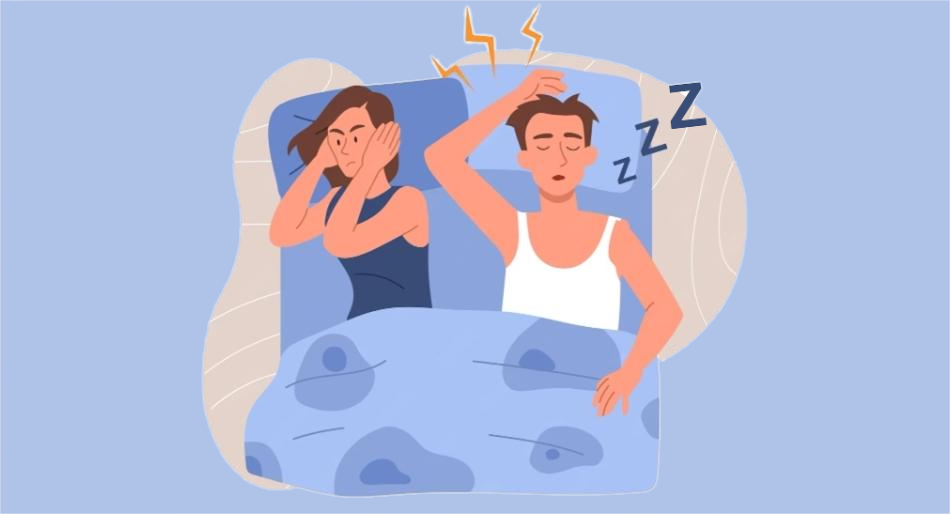
Updated August 2026: refreshed with the latest 2026 insights on sleep apnea in non-obese and thin individuals, including new diagnostic guidance.
What’s New in 2026: Why Thin People Are Still Getting Missed
The misconception that sleep apnea only affects overweight individuals remains one of the biggest reasons thin people go undiagnosed. In 2026, sleep specialists in Hyderabad report that a significant share of new diagnoses are in lean individuals, often with a family history of the condition or anatomical factors such as narrow airways. Recent guidelines now recommend home sleep testing for anyone with classic symptoms, regardless of body type, making diagnosis more accessible than ever.
If you’re thin but snore loudly, wake up gasping, or feel exhausted despite eight hours of sleep, these signs deserve a proper evaluation. The good news: effective treatment, from CPAP to oral appliances, works regardless of your weight.
Have you ever told your doctor about waking up exhausted, battling brain fog, or dealing with morning anxiety, only to have them dismiss the possibility of a sleep disorder because you have a slender frame? If so, you are not alone.
For decades, medical professionals and the public have pictured the typical sleep apnea patient as an older, overweight man who snores loud enough to rattle the windows. Weight is a major risk factor, but this persistent stereotype leaves thousands of people slipping through the cracks. They remain exhausted and undiagnosed simply because they do not fit the traditional profile.
Obstructive sleep apnea in non-obese patients is a widespread clinical reality. For thinner adults, the root cause is usually not excess tissue weight. It comes down to structural factors you cannot easily see at a glance—most notably, the underlying bone structure of the face and jaw. We are going to look closely at the physical link between facial structure and sleep apnea, explore other physiological triggers, and detail the unique symptoms so you can advocate for proper testing.
The Stereotype: Why We Think Sleep Apnea Only Affects the Overweight
To understand why thin people get overlooked, we must look at how Obstructive Sleep Apnea (OSA) physically works. OSA happens when the muscles in the back of your throat relax during sleep, causing the airway to narrow or close completely.
In overweight individuals, excess fatty tissue around the neck places external physical weight on the airway. This makes the breathing passage much more prone to collapse when the throat muscles relax at night. Because weight is a visible, easily measurable metric, it became the textbook hallmark of the condition. Doctors are trained to look for high Body Mass Index (BMI) and thick neck circumferences when assessing sleep risks.
But gravity and neck fat are not the only things capable of narrowing a breathing tube. Think of your airway like a drinking straw. You can pinch a straw from the outside using excess weight. However, if that straw was manufactured too narrow from the start, you will struggle to breathe through it, regardless of your body mass.
Overweight vs. Non-Obese Sleep Apnea Differences
| Feature | The Stereotype (Overweight/Obese) | The Reality for Thin Patients |
|---|---|---|
| Primary Trigger | Excess fatty tissue in the neck compressing the airway from the outside. | Facial bone structure, inherently narrow airways, or genetic muscle tone. |
| Snoring Volume | Usually very loud, gasping, and highly disruptive to sleeping partners. | Can be surprisingly quiet, or sometimes entirely absent. |
| Initial Assessment | Quickly referred to a sleep clinic for overnight observation. | Often misdiagnosed with insomnia, chronic fatigue syndrome, or anxiety. |
Can Skinny People Have Sleep Apnea?
Yes, they absolutely can. It is entirely possible, and highly documented in sleep medicine, that individuals with low body fat experience severe sleep breathing disorders.
When evaluating non-obese patients, the diagnostic focus shifts from external compression to internal anatomy. The assumption that only heavy individuals suffer from obstructed airways is a dangerous blind spot in initial clinical assessments. In skinny people, the airway collapses not because of external fat deposits pressing inward, but due to spatial constraints within the oral cavity and the throat itself. If your skeletal framework does not provide enough room for your soft tissues, those tissues will eventually block your airflow.
The Hidden Role of Facial Structure and Sleep Apnea
If weight is not the culprit, we must evaluate the underlying skeletal anatomy. For a significant portion of thin adults suffering from chronic sleep deprivation, the answer lies in how their facial bones formed during childhood and adolescence. Specific structural traits directly contribute to breathing restrictions at night.
Narrow Jaw Sleep Apnea: When Your Tongue Needs More Room
A properly developed upper jaw (the maxilla) is wide and U-shaped. This broad structure allows the tongue to rest comfortably against the roof of the mouth, maintaining a clear airway behind it. Many people today, however, develop a narrow, V-shaped jaw.
If you have a narrow jaw, your tongue simply lacks the necessary room to sit where it belongs. When you fall asleep and your body relaxes, that trapped tongue has nowhere to go but backward—straight into your airway. Narrow jaw sleep apnea is incredibly common in thin people. It frequently correlates with a history of needing orthodontic extractions or having highly crowded teeth during childhood, both of which indicate limited space in the mouth.
Receding Chin and Sleep Apnea: The Airway Pinch
Take a moment to observe your side profile in a mirror. Does your chin align roughly with your lower lip, or does it sit further back toward your neck? A recessed lower jaw (medically known as retrognathia) is one of the leading underlying causes of sleep apnea in thin adults.
Your tongue anchors directly to your lower jaw. When the lower jaw sits too far back, it naturally positions the base of your tongue closer to the posterior wall of your throat. Even while you are awake, your airway might be narrower than average. Once you fall asleep, it only takes a minimal amount of muscle relaxation for that receding chin to trigger a complete airway collapse.
Craniofacial Abnormalities Sleep Apnea: Other Structural Factors
Beyond the general position of the jaw and chin, several other structural elements restrict airflow. A high-arched palate often intrudes upward into the nasal cavity, decreasing nasal volume and making it difficult to breathe through your nose.
When nasal breathing is compromised, the body defaults to mouth breathing to survive. Sleeping with an open mouth alters the natural posture of your jaw and tongue, forcing the lower jaw backward down the airway path and drastically increasing the likelihood of an obstruction.
Facial Traits and Their Impact on Your Sleep
| Facial Characteristic | How It Physically Affects Your Airway | Risk Level for Sleep Apnea |
|---|---|---|
| Receding Chin (Retrognathia) | Pushes the base of the tongue backward directly into the throat passage. | Very High |
| Narrow Upper Jaw | Restricts nasal breathing space and severely limits tongue resting room. | High |
| Overbite / Misaligned Bite | Alters jaw position during sleep, promoting an unnatural backward collapse. | Moderate to High |
| Deviated Septum | Blocks nasal passages, forcing dangerous mouth-breathing habits at night. | Moderate |
Sleep Apnea Causes Besides Weight: What Else is at Play?
While facial structure is a massive piece of the puzzle, other physiological factors cause sleep apnea in thin individuals.
Enlarged tonsils and adenoids can physically block the airway, regardless of how wide your jaw is. Though primarily associated with pediatric sleep apnea, enlarged tonsils affect many adults and remain a primary cause of airway obstruction in thin people.
Genetics also dictate the inherent firmness of your airway muscles. Some people inherit pharyngeal tissues that are simply more prone to collapsing when relaxed. Hormonal shifts play a distinct role as well. Women going through menopause experience a drop in progesterone, a hormone that helps maintain airway muscle tone. This reduction leads to a noticeable spike in sleep apnea rates among thin, older women. Finally, an elongated soft palate—the tissue at the roof of the back of your mouth—can droop into the windpipe during sleep, stopping airflow entirely.
Sleep Apnea Skinny Symptoms: What to Look Out For
Because the classic symptom of sleep apnea is room-shaking snoring, thin people who do not snore loudly often assume they are exempt from the condition. However, sleep apnea skinny symptoms manifest quite differently.
Instead of loud snoring, a thin person with a narrow airway might experience Upper Airway Resistance Syndrome (UARS). In this scenario, the body works excessively hard to pull air through a tiny space. This effort triggers a heightened stress response, waking the brain up just enough to keep breathing, often without generating a loud snorting sound.
If you are non-obese, monitor for these hidden signs:
- Chronic insomnia: Waking up frequently in the middle of the night and struggling to fall back asleep.
- Teeth grinding (Bruxism): The brain attempts to push the jaw forward to open the restricted airway, resulting in severe nighttime teeth grinding and jaw pain.
- Morning headaches and brain fog: Caused by highly fragmented sleep and inadequate overnight oxygenation.
- Anxiety and depression: A constant “fight or flight” sensation during the day stemming from repetitive nighttime adrenaline spikes used to keep you breathing.
- Cold hands and feet: Poor nighttime breathing heavily disrupts your circulatory system.
Getting Diagnosed: Obstructive Sleep Apnea in Non-Obese Patients
If the structural traits and symptoms align with your experience, self-advocacy is your most important tool. When you consult a physician, explicitly state that you want a sleep study. Mention your specific anatomical concerns, such as a receding chin, narrow palate, or chronic mouth breathing, which might be restricting your nighttime airflow.
Diagnostic methods have improved significantly. You do not always have to sleep in a clinical laboratory covered in wires. At-home sleep tests are highly accessible and accurately track breathing events, heart rate, and oxygen saturation from your own bed.
If you receive a diagnosis, remember that treatments for thin people often differ from standard protocols. While continuous positive airway pressure (CPAP) therapy remains highly effective by forcing the airway open with air, thin patients with distinct structural issues frequently find relief through alternative methods. Mandibular advancement devices (custom oral appliances) pull the lower jaw forward to physically open the throat space. In more severe anatomical cases, orthodontic expansion or corrective jaw surgery can permanently widen the airway, addressing the anatomical root cause rather than just managing the nightly symptoms.
