
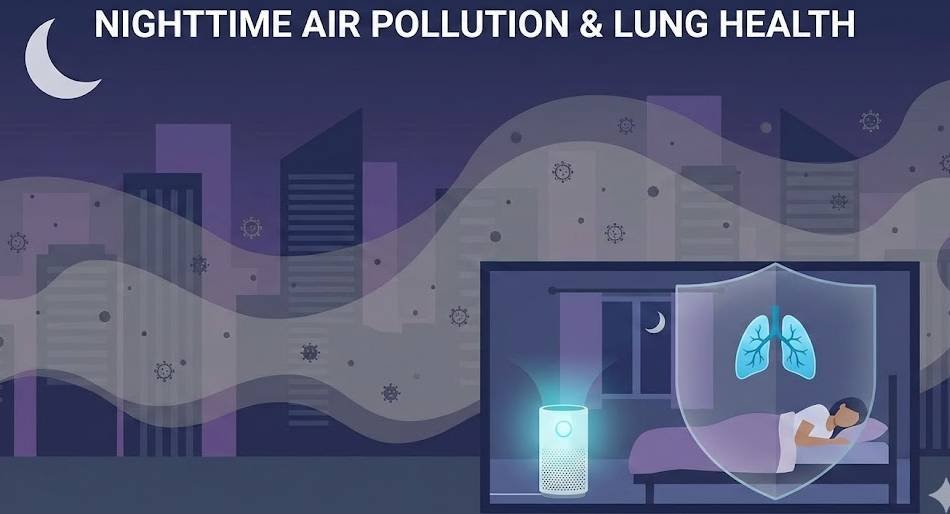
Air pollution has become one of the most serious public health challenges in India. From metro cities like Delhi and Mumbai to growing tech hubs like Hyderabad and Bengaluru, air quality often drops to dangerous levels. Many people assume they are safer at night because traffic is lower and temperatures are cooler. However, this belief does not reflect reality. In fact, nighttime pollution can be just as harmful, and in some seasons it becomes even more dangerous.
Understanding how pollution behaves after sunset is essential for anyone who experiences breathing problems or sleeps poorly. It also helps you make informed decisions about protecting your lungs. This article explains how air quality changes at night, why it affects your lungs, who is at higher risk, and what steps you can take before going to bed.
To explore more lung-related topics, you may visit the main blog.
Dr. Nalini Nagalla Blog
1. India’s Rising Pollution Levels: Debunking the Myth of Cleaner Nights
India’s air quality is deteriorating due to rapid urbanization, vehicle emissions, industrial activities, and seasonal factors such as crop burning. Many people assume that pollution levels drop at night because the roads are quieter. However, this belief is misleading. Yet this is not always true. In several Indian cities, the air becomes heavier after sunset due to temperature changes and stagnant wind. This means the pollutants stay closer to the ground where we breathe.
So while the streets may look calm, the air you inhale may still be harmful. It is essential to know that cleaner nights are often a myth, especially during the winter months.
2. What Happens to Air Quality at Night?
Air quality changes significantly after sunset. One of the main reasons is a natural phenomenon called temperature inversion. The phrase may sound complex, yet the concept is simple.
During the day, the sun heats the ground. The warm air rises, carrying pollutants into the atmosphere. After sunset, the ground cools quickly. The air near the surface becomes cooler than the air above it. Since cool air is heavier, it stays trapped below the warm layer. This acts as a lid, preventing pollutants from rising.
As a result, the pollution stays near the ground and builds up through the night. When people walk outside early in the morning, they often inhale this concentrated polluted air.
Why winter nights are more hazardous
The temperature decreases more rapidly at night. Wind speeds tend to be lower, and pollution from traffic and industrial areas settles near residential neighborhoods. As a result, smog becomes denser and more stable. Many people often wake up with headaches, dry throats, or blocked noses, which are symptoms associated with nighttime exposure to trapped pollutants.
3. How Nighttime Air Pollution Affects Your Lungs
Nighttime pollution enters your airways when you breathe during sleep. The pollutants irritate the sensitive lining of your respiratory tract. This triggers coughing or mucus formation. Continuous irritation leads to inflammation, which makes breathing harder.
Reduced oxygen exchange
When air quality is poor, your lungs struggle to exchange oxygen effectively. This affects the quality of your sleep. You may wake up feeling tired or foggy because your body did not get enough oxygen through the night.
Higher risks for certain groups
Nighttime pollution worsens several lung conditions:
- Asthma flare-ups during sleep
- COPD symptoms such as breathlessness and chest congestion
- Allergic rhinitis, especially in people sensitive to dust or smoke
- Sleep disturbances, including difficulty staying asleep
For detailed information on sleep and breathing issues, you can explore the following link:
People with sleep apnea often face additional challenges because polluted air can increase airway inflammation. This leads to deeper and more frequent breathing pauses.
4. Who Is Most at Risk During Nighttime Pollution?
Polluted air affects everyone, but some groups are especially vulnerable during night hours.
Children
Their lungs are still developing. They breathe faster than adults, which means they inhale more pollutants.
Elderly
Age weakens the lungs and immune system. Pollution increases their risk of infections and respiratory failure.
Asthma and COPD patients
Their airways are already sensitive. Nighttime pollution triggers stronger symptoms.
Sleep apnea patients
Polluted air worsens airway collapse and can prolong breathing pauses.
Residents near traffic-heavy zones
People living near highways, IT hubs, flyovers, or construction zones inhale stagnant, polluted air at night.
Hyderabad areas close to ORR, Hitech City, and busy junctions often report higher nighttime AQI during winter.
5. Key Signs That Nighttime Pollution Is Affecting Your Breathing
You may not notice pollution while sleeping, but your body shows signs the next morning.
Common symptoms include:
- Persistent morning cough
- Throat irritation or dryness
- Waking up breathless or tight-chested
- Poor sleep quality despite long hours
- Increased use of inhalers or allergy medicines
- Chest heaviness between 4 am and 7 am
These symptoms may seem mild, but consistent patterns indicate your lungs are reacting to nighttime air.
To understand respiratory health in more detail, you can visit:
6. How to Protect Your Lungs at Night
Although you cannot control outdoor pollution, you can protect your indoor air quality and reduce exposure.
Use a HEPA-grade air purifier.
A purifier with a true HEPA filter removes PM2.5 and other harmful particles. Keep it on throughout the night, especially during winter.
Keep windows closed during high AQI hours.
Night and early morning are often the worst times for AQI. Closing windows helps reduce pollutant entry.
Perform a saline nasal rinse at night.
A simple saline rinse clears dust and helps you breathe more comfortably while sleeping.
Avoid evening outdoor exercise.
Evening walks or runs expose you to higher levels of pollutants. Choose indoor or early-morning workouts only when the AQI is safe.
Keep indoor humidity balanced.
Indoor plants have a small impact on air cleaning, but they help maintain humidity, which reduces dryness-related irritation.
Use anti-pollution masks when stepping outside at night.
If you must step out, choose N95 or N99 masks.
👉 WHO – Air Pollution Health Topics
7. When to See a Pulmonologist
You should see a pulmonologist if your symptoms persist for more than a week or if they interfere with your daily activities.
Seek medical advice if you notice:
- Persistent morning cough
- Chest tightness that worsens after waking
- Snoring accompanied by breathing difficulties
- Nighttime wheezing
- Allergies that disrupt sleep
- Increasing reliance on inhalers
Pollution-related lung issues require thorough Evaluation: Early treatment can help prevent long-term complications, such as chronic airway inflammation, recurrent infections, and decreased lung capacity.
8. Conclusion
Nighttime pollution is a silent and often underestimated threat in Indian cities. Many people believe that pollution diminishes after sunset; however, scientific evidence indicates the contrary. Pollutants frequently remain trapped close to the ground, entering our airways during the night. you sleep. This affects your lung function, your sleep quality, and your morning energy levels.
The good news is that simple lifestyle changes, awareness, and timely medical care can help protect your lungs. Being attentive to early symptoms can make a significant difference. You deserve restful sleep and healthy breathing. By taking the right steps, you can safeguard your lungs even on the most polluted nights.
Frequently Asked Questions (FAQ)
Yes. Due to temperature inversion pollutants stay closer to the ground at night. This often makes nighttime air more harmful especially in winter.
Absolutely. Polluted air irritates your airways reduces oxygen exchange and disrupts your sleep cycle. Many people wake up tired due to night exposure.
Morning cough, breathlessness, poor sleep, and throat irritation are strong signs that nighttime air quality is impacting your breathing.
Yes. Children inhale more air relative to their size and are more sensitive to pollutants. They often show morning allergies or cough when exposed.
