
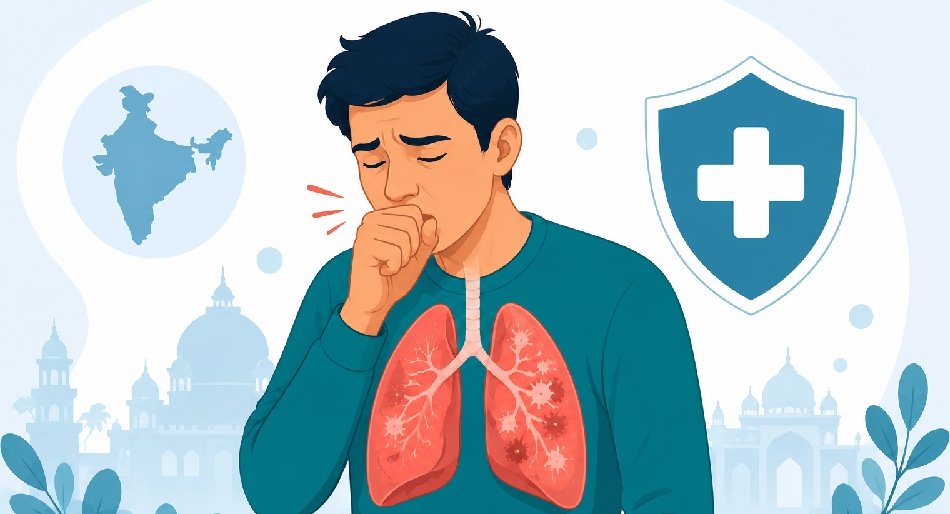
India still accounts for about 25% of the world’s tuberculosis cases, the highest share of any country (WHO Global TB Report, 2025). That’s roughly 2.8 million new cases every year (WHO Global TB Report, 2025), even as incidence falls faster than the global average.
Key Takeaways
- A cough lasting more than 2-3 weeks, with or without phlegm, is the most important TB warning sign in India.
- Classic symptoms also include fever, especially in the evening, unexplained weight loss, night sweats, and tiredness.
- TB is curable with a full 6-month treatment course, and treatment in India is free under the NTEP program.
- Molecular tests like CBNAAT can confirm TB within a day and detect drug resistance.
- Ignoring symptoms delays diagnosis, and each month of delay increases the risk of spread to family and close contacts.
The problem isn’t just the numbers. It’s that TB symptoms start mild, masquerade as a stubborn cold, and by the time most people seek help, the disease has been spreading for weeks. A cough that lingers, evening tiredness, a slow weight loss, these feel like everyday problems. Sometimes they’re exactly that. Sometimes they’re TB.
Here’s what you need to know: a cough lasting more than 2-3 weeks, especially with any of the classic TB signs, deserves a proper check, not another round of home remedies.
A cough lasting more than 2-3 weeks, with or without phlegm, is the most important TB warning sign in India. Classic symptoms also include fever, especially in the evening, unexplained weight loss, night sweats, and tiredness. TB is curable with a full 6-month treatment course, and treatment in India is free under the NTEP program. Molecular tests like CBNAAT can confirm TB within a day and detect drug resistance. Ignoring symptoms delays diagnosis, and each month of delay increases the risk of spread to family and close contacts.
Why TB Symptoms Are Easy to Miss
TB is called the “great mimicker” for a reason. Its early symptoms overlap almost perfectly with common Indian health complaints: a lingering cough, low-grade fever, feeling run down. Patients often blame the season, the pollution, or overwork.
What makes TB sneaky is the slow onset. The CDC notes that TB symptoms develop gradually, mild at first, and people routinely blame allergies for the cough or daily stress for the low energy (CDC, 2026). Weeks pass before anyone thinks about TB. By then, the bacterial load has grown, and close contacts may already be exposed.
That’s why the 2-week rule matters. Any cough lasting beyond 2-3 weeks, especially with other signs, deserves a medical evaluation rather than another month of syrups. If you’re also dealing with breathlessness or a chronic cough, our guide on lung disease warning signs covers when symptoms deserve attention.
The 5 Early Signs Most People Miss
1. A cough that just won’t quit
The defining symptom of pulmonary TB is a cough lasting three weeks or longer. It often starts dry before producing phlegm, and some people cough up blood-streaked sputum in advanced stages. If your cough has crossed the 2-week mark, get it evaluated.
2. Evening fever and chills
TB classically causes low-grade fever that spikes in the late afternoon or evening. It’s not the dramatic high fever of flu, just a persistent warmth that comes and goes, often with chills and drenching night sweats that soak the bedsheet.
3. Unexplained weight loss
Losing weight without changing your diet or activity is a red flag. TB redirects your body’s energy to fight the infection, and appetite often drops. A few kilos over a month, especially alongside other symptoms, should raise concern.
4. Fatigue that rest doesn’t fix
The exhaustion of TB isn’t normal tiredness. It’s the kind of fatigue where you sleep 8 hours and still drag through the day. Combined with the fever and weight changes, it forms a recognizable pattern.
5. Chest pain or breathlessness
As TB affects the lungs, some people feel chest discomfort, a persistent ache, or increasing breathlessness with activity. Pain that worsens with deep breathing or coughing can signal pleural involvement.
Who Is at Higher Risk in India
If you’re a smoker or have chronic lung issues, the risk profile overlaps with other conditions we evaluate, like COPD and asthma.
TB doesn’t choose randomly. The risk is concentrated in specific groups:
- Close contacts, household members of someone with active TB
- People with diabetes, India has one of the world’s largest diabetic populations, and diabetes roughly triples TB risk
- Smokers and those with chronic lung disease, damaged lungs are easier targets
- Malnourished individuals, low body weight weakens immunity
- Immunocompromised people, including those on long-term steroids or with HIV
- Urban slum dwellers and migrant workers, crowded, poorly ventilated living conditions
If you fall into any of these groups and have a lingering cough, the threshold for getting checked should be lower, not higher.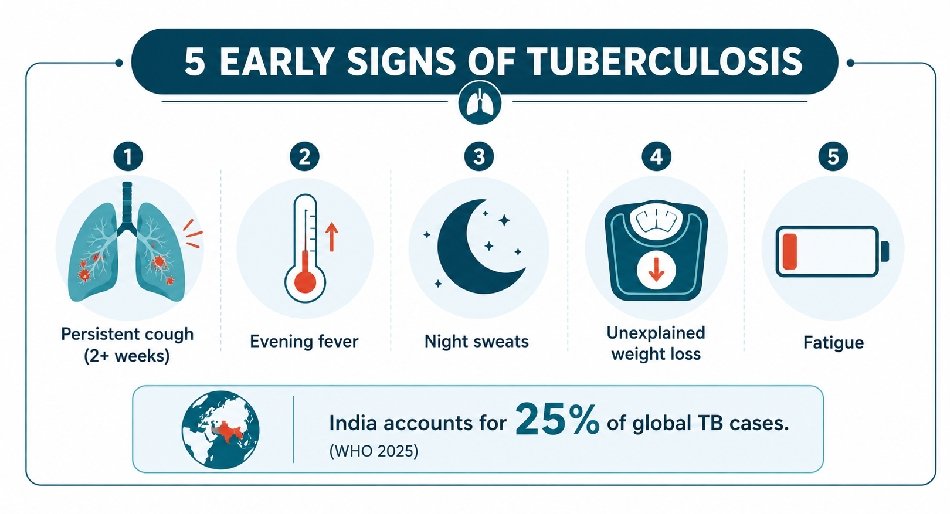
How TB Is Diagnosed in India (2026 Methods)
The old days of waiting weeks for a sputum smear result are over. India’s diagnosis toolkit has improved dramatically:
- CBNAAT (GeneXpert), the molecular test of choice. Detects TB DNA and rifampicin resistance in under 2 hours from a sputum sample. Widely available across India, including in Hyderabad.
- Sputum smear microscopy, the classic test, still used, less sensitive than molecular methods
- Chest X-ray, shows lung patterns suspicious for TB
- Culture, the gold standard, takes weeks but allows full drug-susceptibility testing
- Truenat — a newer portable molecular test used in the [NTEP program](https://tbcindia.gov.in/index1.php?lang=1&level=1&sublinkid=5616&lid=3691)
The shift to molecular testing means most patients now get a confirmed diagnosis within a day or two of testing, which dramatically shortens the window of undiagnosed spread.
What Treatment Looks Like Today
The good news: TB is curable. The standard treatment is a 6-month course of combination antibiotics, with the first 2 months being the intensive phase.
- Free treatment in India, under the National TB Elimination Programme (NTEP), diagnosis and treatment are free at government facilities
- Fixed-dose combinations, modern regimens combine 3-4 drugs in a single pill, improving adherence
- Drug-resistant TB, treated with longer, more complex regimens, but newer all-oral options have replaced painful injections
- Directly Observed Therapy (DOT), support workers ensure patients take every dose, preventing resistance
The critical rule: complete the full course even if you feel better. Stopping early is how drug-resistant TB develops, and resistant strains are far harder and costlier to treat.
When to See a Doctor in Hyderabad
Don’t wait for all symptoms to appear. See a pulmonologist if you have:
- A cough lasting more than 2-3 weeks
- Cough with blood in the sputum
- Evening fever or drenching night sweats
- Unexplained weight loss
- Close contact with someone diagnosed with TB
- Known diabetes or smoking history plus any of the above
Early diagnosis means a shorter, simpler treatment and far less risk to the people around you. For persistent cough evaluation in Hyderabad, you can book a consultation or explore Dr. Nalini’s pulmonary services. Every week of delay is a week the bacteria could be spreading to family members, colleagues, and neighbours.
Worried about a persistent cough?
Dr. Nalini Nagalla evaluates lung and TB symptoms in Hyderabad.
