
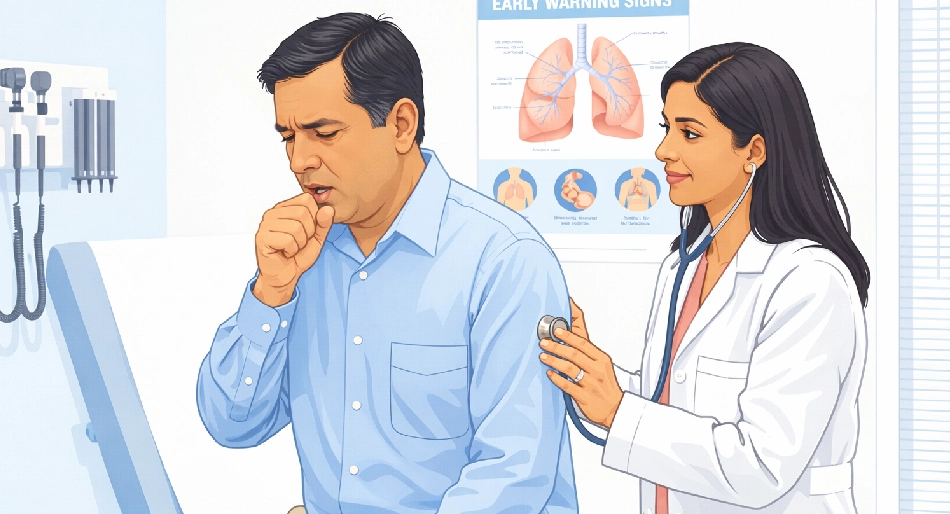
Updated August 2026: refreshed with the latest 2026 guidance on lung disease warning signs and new screening advice for Indian urban populations.
What’s New in 2026: Earlier Detection Matters More
Pulmonologists in 2026 are detecting lung disease earlier than ever, thanks to wider use of affordable spirometry and low-dose CT screening in Indian cities. The practical takeaway: the warning signs below are worth acting on sooner rather than later. If a cough, breathlessness, or chest tightness has persisted for more than two to three weeks, a basic pulmonary function test can confirm whether your lungs are functioning normally, often in under an hour.
For people with risk factors, such as smoking history, occupational dust exposure, or a family history of lung disease, annual screening is now recommended even without symptoms. Earlier detection changes outcomes, and that starts with recognising the signs listed in this guide.
A scratchy throat and a mild cough usually mean a seasonal virus is running its course. You rest, take over-the-counter medication, and wait for your immune system to do its job. But when these symptoms stretch well beyond the typical two-week window, treating them like a passing bug becomes a risk you cannot afford.
Respiratory issues are frequently dismissed as stubborn colds, yet this misjudgment often delays the diagnosis of serious pulmonary conditions. Identifying the early warning signs of lung disease allows for timely medical intervention, which is essential for preserving lung function and keeping your treatment options open. Knowing when a symptom transitions from an ordinary viral response to a chronic indicator can literally save your life. Let’s examine the specific markers that separate a temporary illness from a serious respiratory condition.
The Sneaky Overlap: Lung Disease vs Cold Symptoms
At a biological level, your respiratory system only has a few ways to respond to irritation. Whether the trigger is a harmless rhinovirus or the early stages of Chronic Obstructive Pulmonary Disease (COPD), your body reacts with inflammation. Blood vessels swell, mucus production increases, and the cough reflex is triggered to clear the airway.
Because the initial immune response is identical, a developing lung condition and a common cold look remarkably similar in their early stages. Both cause chest tightness, coughing, and fatigue. The defining difference between the two is duration and trajectory—a common cold peaks within a few days and resolves within a week to ten days. Lung disease establishes a long-term presence and slowly degrades your baseline health. Understanding this overlap prevents you from masking chronic symptoms with cough drops and points you toward a proper clinical evaluation.
Sign 1: A Persistent Cough Not Going Away
Coughing is a highly effective mechanical defense mechanism. It forcefully expels irritants, excess mucus, and foreign particles from your airway. However, if you are dealing with a persistent cough that is not going away after three to four weeks, you are no longer experiencing a standard viral symptom.
Medical professionals classify any cough lasting eight weeks or longer as a “chronic cough.” This prolonged reflex indicates continuous irritation or structural changes within the lungs. Potential chronic cough causes range from highly manageable issues like asthma and gastroesophageal reflux disease (GERD) to severe conditions like pulmonary fibrosis or lung cancer. Pay close attention if the cough changes in character—such as shifting from a dry, hacking sound to a wet, productive cough—or if it routinely disrupts your sleep.
Sign 2: Shortness of Breath Early Signs
It is common to assume that feeling winded is just a natural byproduct of aging or a temporary lapse in physical fitness. If you find yourself gasping for air after carrying groceries from the car or walking up a single flight of stairs, your lungs are signaling a reduction in capacity.
Shortness of breath, early signs—medically known as dyspnea—occur when your airways narrow or the air sacs (alveoli) in your lungs lose their natural elasticity. When lung tissue is damaged, the exchange of oxygen and carbon dioxide becomes inefficient. To compensate, your respiratory muscles have to work significantly harder just to maintain basic blood oxygen levels. If shortness of breath creeps up on you without any major changes to your activity level, it is a primary indicator of diminished lung health.
Sign 3: Chronic Mucus Production
Your airways constantly produce mucus to trap dust, bacteria, and other environmental irritants before they can reach deep into your lungs. During a cold, mucus production naturally spikes for a few days to flush out the viral infection.
If you are coughing up phlegm (sputum) daily for a month or longer, it indicates a severe, ongoing inflammatory response. Chronic mucus production is a hallmark symptom of chronic bronchitis, a condition that falls under the COPD umbrella. When lung tissue is continually irritated, the mucus-producing goblet cells in your airways multiply and enlarge. This creates a thick, sticky environment that actually restricts airflow and serves as a breeding ground for secondary bacterial infections.
Sign 4: Wheezing or Noisy Breathing
Healthy lungs function quietly. Air moves in and out of wide, clear passages without obstruction. Wheezing is a high-pitched whistling sound that occurs when air is forced through airways that have become unusually narrow or partially blocked.
While an acute chest infection or acute bronchitis can cause temporary wheezing, it should fade as the inflammation subsides. A persistent wheeze is a clear indication of structural airway narrowing. This can be caused by the tightening of the smooth muscle around your airways (as seen in asthma), chronic inflammation (as seen in COPD), or even a physical obstruction like a tumor. Wheezing that occurs alongside resting shortness of breath requires immediate clinical assessment.
Sign 5: Chest Pain While Breathing
We are conditioned to associate chest pain primarily with cardiovascular emergencies, but it is also a critical symptom of respiratory distress. The lungs themselves do not have pain receptors, but the thin membrane lining the inside of your chest cavity and surrounding your lungs—the pleura—is highly sensitive.
Experiencing chest pain while breathing, especially a sharp or stabbing sensation during a deep inhalation or cough, points to pleuritic inflammation. This friction between the inflamed tissues is a prominent sign of underlying lung infections like pneumonia, the presence of a pulmonary embolism (a blood clot in the lung), or fluid accumulation in the chest cavity. Any pain that is tied directly to the mechanics of your breathing warrants prompt medical attention.
Sign 6: Coughing Up Blood
Under no circumstances is coughing up blood a normal symptom of a passing cold. Medically referred to as hemoptysis, this symptom can manifest as a few bright red streaks in your mucus or as larger amounts of dark, rust-colored phlegm.
Blood in your sputum indicates that blood vessels in your airways or lungs have ruptured. While it can occasionally result from a severe, violent bout of coughing that tears a tiny vessel, it is more commonly associated with serious pathology. Severe infections like tuberculosis, structural damage like bronchiectasis, and lung cancer are primary suspects. If you notice blood when you cough, treat it as a medical emergency and seek evaluation immediately.
Sign 7: Unexplained Fatigue and Weight Loss
When lung function is compromised, oxygen levels in your blood drop. Without sufficient oxygen, your muscles and organs cannot perform efficiently, leading to chronic, bone-deep exhaustion that sleep does not fix.
Furthermore, breathing is a mechanical process that burns calories. For a healthy individual, the energy cost of breathing is negligible. For someone with severe lung disease, particularly COPD, the effort required to force air in and out of stiff or obstructed lungs is immense. Some patients burn up to ten times more calories simply trying to breathe compared to a healthy adult. If you are experiencing unexplained weight loss alongside profound fatigue and a lingering cough, your respiratory system may be draining your energy reserves just to keep you oxygenated.
How to Tell the Difference Between a Cold and a Lung Infection
If you are uncertain whether you are dealing with a standard upper respiratory infection or a more severe lung issue, you need to evaluate your symptoms systematically. Differentiating between a cold and a lung infection comes down to tracking the duration, intensity, and progression of your condition.
Cold vs. Lung Disease Comparison
| Feature | Common Cold / Viral Bug | Warning Sign of Lung Disease |
| Symptom Duration | 7 to 10 days, gradually improving. | 4 to 8+ weeks with no sign of improvement. |
| Mucus Production | Clear or yellow; clears up within a week. | Constant, high volume; lasts for 30+ days. |
| Breathing Capability | Mild nasal stuffiness; easily resolved. | Wheezing, feeling winded from routine activity. |
| Chest Sensation | Mild soreness in the chest from coughing. | Sharp, stabbing chest pain while breathing deeply. |
| Energy Levels | Tired for a few days, normal recovery. | Debilitating fatigue; sudden, unexplained weight loss. |
When to See a Doctor for Respiratory Disease Symptoms
Waiting for a chronic respiratory issue to resolve on its own is a dangerous strategy. Early diagnosis translates to better management strategies and slows the progression of lung damage. Use your symptoms to dictate your timeline for seeking medical care. Simple diagnostic tools, such as spirometry to measure airflow or a chest X-ray to visualize lung tissue, can quickly confirm or rule out serious conditions.
Symptom Action Plan
This table outlines how to respond to various respiratory symptoms based on their duration and severity. Understanding these triggers can help you decide when to manage symptoms at home and when to seek professional medical advice.
| Your Current Symptom | Likely Clinical Meaning | Recommended Action |
| Cough lasting 1–2 weeks | Standard viral infection or passing cold. | Rest, stay hydrated, and use over-the-counter remedies. |
| Cough lasting 3–8 weeks | Post-viral inflammation, allergies, or early chronic disease. | Schedule a non-urgent appointment with a primary care physician. |
| Shortness of breath at rest | Your lungs are not processing sufficient oxygen. | See a doctor immediately. |
| Coughing up blood | Internal tissue damage, severe infection, or malignancy. | Go to Urgent Care or the Emergency Room. |
Frequently Asked Questions
The earliest signs are often subtle shifts in your baseline health. You may notice a persistent cough that lasts for over a month, a subtle decrease in physical stamina where normal tasks leave you winded, or the need to clear your throat of excess mucus every morning. Recognizing and reporting these early shifts to a physician is vital for early intervention.
Yes, during the first few days. Both trigger your body’s inflammatory response, resulting in coughing, fatigue, and chest congestion. The primary difference is the trajectory. A cold will peak and resolve within a week to ten days. A severe lung infection, like pneumonia or acute bronchitis, will worsen over time, often introducing high fevers, deep chest pain, and significant shortness of breath.
You should not panic, but a clinical evaluation is necessary. A cough lasting longer than eight weeks is officially considered chronic, regardless of how healthy you feel otherwise. It could stem from highly treatable conditions like post-nasal drip, acid reflux, or adult-onset asthma. However, ruling out structural lung damage or early-stage disease is critical for your long-term health.
When you inhale deeply, your lungs expand and rub against the pleura, the membrane lining your chest wall. If you are suffering from a lung infection, tissue inflammation, or internal damage, this friction causes a sharp, stabbing pain known as pleurisy. Because this can be an indicator of serious conditions like a pulmonary embolism or pneumonia, it should always be evaluated by a healthcare professional.
