
Frequently Asked Questions
What is pigeon lung disease?
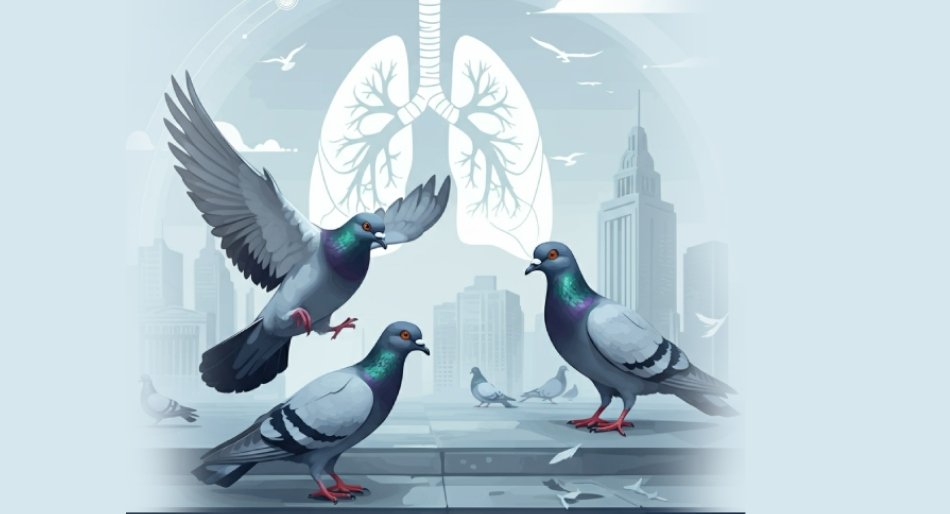
Pigeon lung disease, also known as hypersensitivity pneumonitis or bird fancier's lung, is an inflammatory lung condition caused by repeated exposure to bird droppings, feathers, or dander. It commonly affects pigeon breeders, pet bird owners, and people who work with birds.
What are the early symptoms of pigeon lung disease?
Early symptoms include shortness of breath, chest tightness, dry cough, wheezing, and fatigue. Symptoms often worsen during or after cleaning bird cages, coops, or lofts, and may improve when away from bird exposure for a period of time.
How is pigeon lung disease diagnosed?
Diagnosis involves a combination of clinical history, imaging such as chest X-ray or CT scan, lung function tests, and specific antibody blood tests. A pulmonologist may also perform a bronchoscopy to examine lung tissue or confirm hypersensitivity to bird proteins.
Can pigeon lung disease be treated?
Treatment focuses on reducing or eliminating exposure to birds and bird-related allergens. In mild cases, avoiding contact may be enough. Severe or chronic cases may require corticosteroids to reduce lung inflammation. A specialist pulmonologist will tailor the treatment plan based on disease stage.
How do I prevent pigeon lung disease?
Prevention includes wearing protective masks and gloves when handling birds or cleaning enclosures, ensuring good ventilation in bird keeping areas, and washing hands thoroughly after contact. People with known lung sensitivity should avoid prolonged exposure to pigeons or pet birds.
