
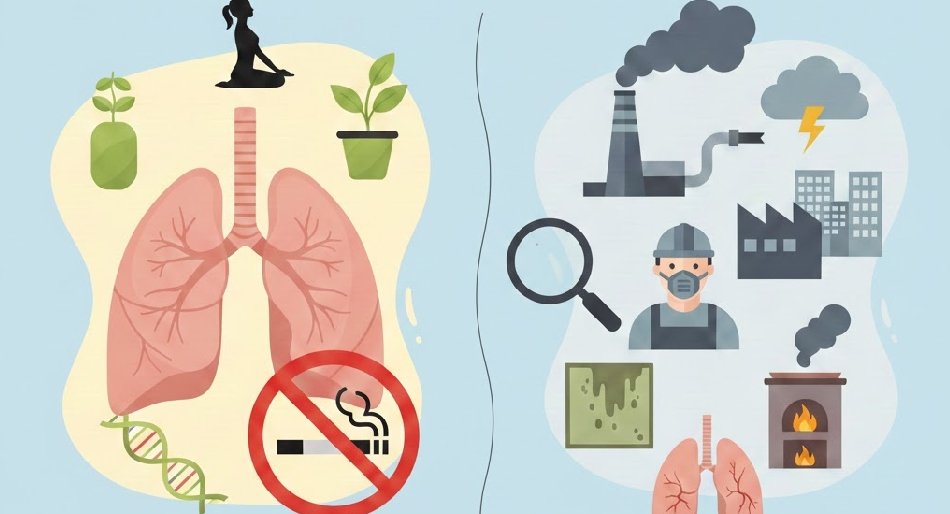
Most people associate Chronic Obstructive Pulmonary Disease (COPD) exclusively with chain-smokers. It is a logical assumption, given that tobacco use is the leading cause of the condition worldwide. However, receiving a COPD diagnosis when you have never touched a cigarette can be confusing and isolating. Patients often feel stigmatized or misunderstood by the medical community and the public, which views lung disease through the lens of smoking history.
The reality is that lung health is influenced by a complex interplay of genetics, environment, and developmental history. A significant portion of COPD cases arises from factors completely unrelated to tobacco use. Understanding these hidden risks is essential for early diagnosis and effective management, particularly for those who assume they are immune.
Introduction: The Misconception of COPD as a “Smoker’s Disease”
For decades, public health campaigns have successfully linked smoking to lung damage. While this has reduced smoking rates, it has inadvertently created a blind spot. When a non-smoker develops a chronic cough or shortness of breath, COPD is rarely their first thought—and unfortunately, it is often not the first thought for general practitioners either.
This delay in suspicion leads to delayed diagnosis. Many non-smokers are treated for recurrent bronchitis or misdiagnosed with adult-onset asthma for years before the true nature of their condition is revealed. By the time a correct diagnosis is made, lung function may have already declined significantly. We need to decouple the disease from the behavior. COPD is a physiological condition characterized by airflow obstruction, regardless of what triggers it.
Can Non-Smokers Get COPD? The Short Answer
Yes. While smoking remains the primary risk factor, approximately 20% to 25% of people diagnosed with COPD have never smoked.
In low- and middle-income countries, this percentage is often higher due to different environmental exposures. Even in developed nations, the number of “never-smokers” with COPD is substantial enough that pulmonologists now view the disease as having multiple distinct phenotypes (types). The pathology looks the same on a basic spirometry test—airway obstruction that is not fully reversible—but the underlying cellular mechanisms and progression often differ from smoking-induced COPD.
Top Causes of COPD in Non-Smokers
If tobacco isn’t the culprit, what is? The lungs are delicate filters constantly exposed to the outside world. Cumulative damage from various sources can result in the same scarring and inflammation seen in smokers.
Environmental Risk Factors for COPD: Indoor and Outdoor Air Pollution
Air quality plays a massive role in lung defense. Outdoor pollution, specifically fine particulate matter (PM2.5) and nitrogen dioxide from vehicle exhaust, contributes significantly to lung function decline. Living near major roadways or in industrial zones exposes the bronchial tubes to a constant, low-level assault.
However, indoor air pollution is often the more aggressive, silent driver. In many parts of the world, the burning of biomass fuels (wood, animal dung, crop residues) and coal for cooking and heating in poorly ventilated homes is a leading cause of COPD, particularly in women. Even in modern homes, long-term exposure to mold, poor ventilation, and volatile organic compounds (VOCs) from cleaning agents can irritate the airways enough to trigger chronic inflammation over the course of decades.
Occupational COPD Causes: Workplace Dust and Chemicals
Your job can damage your lungs. Occupational COPD is a recognized medical condition resulting from long-term exposure to dust, vapors, and fumes. This is not limited to heavy industry; it spans various sectors.
| Industry | Primary Irritants | Mechanism of Injury |
|---|---|---|
| Agriculture / Farming | Grain dust, pesticides, ammonia, animal dander. | Organic dust causes hypersensitivity and chronic airway inflammation. |
| Construction / Mining | Silica dust, cement dust, coal dust, asbestos. | Inorganic particles lodge in lung tissue, causing fibrosis and obstruction. |
| Textiles & Manufacturing | Cotton dust, chemical dyes, synthetic fibers. | “Byssinosis” (brown lung) and chemical irritation damage the bronchioles. |
| Cleaning / Janitorial | Bleach, ammonia, strong disinfectants. | Repeated inhalation of volatile chemicals damages the mucosal lining. |
| Welding | Metal fumes (cadmium, manganese). | Fine metal particles create oxidative stress in lung tissue. |
Secondhand Smoke and COPD Risk: The Danger of Passive Exposure
You may not smoke, but if you grew up in a household where parents smoked, or worked for years in bars and restaurants before indoor smoking bans, your lungs absorbed toxins. Secondhand smoke exposure affects lung development in children and accelerates lung function decline in adults. “Never-smokers” with significant secondhand exposure show similar inflammatory markers to active smokers, albeit usually at lower intensities.
Is COPD Hereditary? Understanding Alpha-1 Antitrypsin Deficiency
Genetics is the strongest risk factor, with no external exposure. Alpha-1 Antitrypsin Deficiency (AATD) is a genetic condition in which the body fails to produce enough Alpha-1 protein, which protects the lungs from the enzyme neutrophil elastase. Without this protection, enzymes produced by the body’s own immune system start digesting lung tissue.
AATD is often underdiagnosed. It can cause early-onset emphysema in people as young as 30 or 40. Anyone diagnosed with COPD who is a non-smoker, particularly if they are under 45, should be tested for this genetic marker immediately.
The Link Between Chronic Asthma and COPD Development
There is a clinical entity known as Asthma-COPD Overlap (ACO). While asthma and COPD are distinct diseases—asthma is usually allergic and reversible, COPD is not—severe, uncontrolled asthma can lead to permanent airway remodeling. Over decades, the chronic inflammation associated with asthma can scar the airways, leading to fixed obstruction that mimics COPD. This is most common in individuals whose asthma was poorly managed during childhood and early adulthood.
History of Childhood Respiratory Infections
Lung health trajectories are often set early in life. Severe respiratory infections during childhood, such as pneumonia, bronchitis, or viral illnesses like RSV, can impair lung growth. If a child’s lungs do not reach their full growth potential (maximum volume), they start adulthood with a lower baseline of lung function. As natural aging occurs, they may cross the threshold into COPD territory sooner than someone who started with optimal lung capacity.
Recognizing Non-Smoker COPD Symptoms
The clinical presentation of COPD in non-smokers is often subtle, leading to the “it’s just aging” or “I’m just out of shape” rationalization.
Common Warning Signs to Watch For
The symptoms are largely the same as those in smokers, though the onset might be more gradual:
- Chronic Dyspnea: Shortness of breath, initially only during exertion (like climbing stairs), eventually progressing to breathlessness at rest.
- Chronic Cough: A cough that persists for months, even if it’s dry.
- Sputum Production: Bringing up mucus regularly, though non-smokers often produce less phlegm than smokers.
- Wheezing: A whistling sound when exhaling.
- Chest Tightness: A feeling of pressure or inability to take a deep breath.
Alpha-1 Antitrypsin Deficiency Symptoms Specifically
In addition to the respiratory symptoms above, patients with AATD may present with liver issues, as the abnormal protein gets stuck in the liver. Unexplained liver disease or elevated liver enzymes paired with shortness of breath is a major red flag for this genetic type.
Do Symptoms Differ Between Smokers and Non-Smokers?
Yes, there are nuanced differences. Non-smokers typically exhibit less emphysema (destruction of air sacs) and more airway disease (inflammation of the tubes) unless they have AATD.
| Feature | Smoker’s COPD | Non-Smoker’s COPD |
|---|---|---|
| Primary Symptom | Productive cough (“Smoker’s cough”), heavy phlegm. | Breathlessness, dry cough, wheezing. |
| Comorbidities | High rates of lung cancer, heart disease, and vascular issues. | More likely to have asthma, osteoporosis, or acid reflux. |
| Progression | Often rapid if smoking continues. | Generally slower progression, but still chronic. |
| Lung Damage Type | Heavy emphysema and chronic bronchitis. | More often associated with small airway disease/fibrosis. |
Diagnosing COPD in People Who Never Smoked
Because physicians may not suspect COPD initially, you may need to advocate for specific testing if you have persistent symptoms.
Spirometry and Pulmonary Function Tests
Spirometry is the gold standard for diagnosis. You blow into a machine that measures how much air you can inhale and how quickly you can exhale it. Key metrics include FEV1 (Forced Expiratory Volume in 1 second) and FVC (Forced Vital Capacity). If the ratio of these numbers is below a certain threshold—and doesn’t improve significantly after taking medication—it confirms COPD.
Genetic Testing for Alpha-1
As mentioned, a simple blood test can measure Alpha-1 antitrypsin levels. If low, further genetic sequencing confirms the specific mutation. This is crucial because AATD has specific augmentation therapies not available to other COPD patients.
Imaging and Blood Tests
CT Scans: High-resolution CT scans help differentiate between COPD, bronchiectasis (widening of airways), and fibrosis. They also screen for early signs of lung cancer, though the risk is lower in non-smokers.
Eosinophil Count: A blood test to check for eosinophils (a type of white blood cell) helps determine if the COPD has an asthmatic component, which influences which inhalers will be most effective.
Prevention and Management Strategies for Non-Smokers
If you have been diagnosed, the goal shifts from prevention to preservation. You want to protect the lung function you have left.
Reducing Exposure to Environmental Irritants
Control your environment aggressively. Use high-quality HEPA air purifiers in your home, specifically in the bedroom. Monitor local air quality indices (AQI); on days with high pollution or ozone levels, stay indoors with windows closed. If your workplace involves dust or fumes, strict adherence to PPE (N95 masks or respirators) is non-negotiable.
Dietary and Lifestyle Adjustments
Nutrition: COPD burns calories; the effort of breathing increases metabolic rate. However, obesity can restrict lung expansion. A balanced diet, maintaining a healthy weight, is vital. Anti-inflammatory foods (rich in Omega-3s and antioxidants) may help reduce systemic inflammation.
Exercise: It seems counterintuitive to exercise when short of breath, but conditioning the muscles helps them use oxygen more efficiently. This reduces the burden on the lungs.
Medical Treatments and Pulmonary Rehabilitation
Pharmacological treatment for non-smokers follows similar protocols to smokers:
- Bronchodilators: Inhalers that relax the muscles around the airways (LAMA and LABA).
- Inhaled Corticosteroids: Used more frequently in non-smokers who have an asthmatic overlap or high eosinophil counts.
- Pulmonary Rehab: A structured program of exercise and education. This is incredibly effective for improving quality of life and exercise tolerance.
Prognosis: Is COPD Milder in Non-Smokers?
Generally, the prognosis for non-smokers is somewhat better than for smokers, primarily because they typically have fewer smoking-related comorbidities like severe cardiovascular disease or lung cancer. Furthermore, non-smokers often respond better to inhaled corticosteroid treatments, particularly if there is an asthma component.
However, “milder” does not mean “mild.” COPD is a progressive condition. Without management, lung function will decline. The key difference is that non-smokers remove the single biggest accelerator of the disease—tobacco smoke—by default. With proper medical care, avoidance of triggers, and lifestyle management, non-smokers with COPD often maintain a stable quality of life for many years.
Conclusion: Prioritizing Lung Health Regardless of Smoking Status
The assumption that you are safe from COPD simply because you don’t smoke is a dangerous oversight. Our lungs are vulnerable to a wide array of environmental, occupational, and genetic factors. Whether it is the air we breathe in our cities, the dust we inhale at work, or the genes we inherited, the risks are real.
If you are experiencing chronic respiratory symptoms, do not dismiss them based on your smoking status. Advocate for a spirometry test. Early detection is the most powerful tool available to preserve lung function and maintain an active life. Lung health is not just about what you avoid; it is about understanding what you are exposed to and taking proactive steps to protect your breathing for the future.
